An unexpected find: Ernest William Mazlin
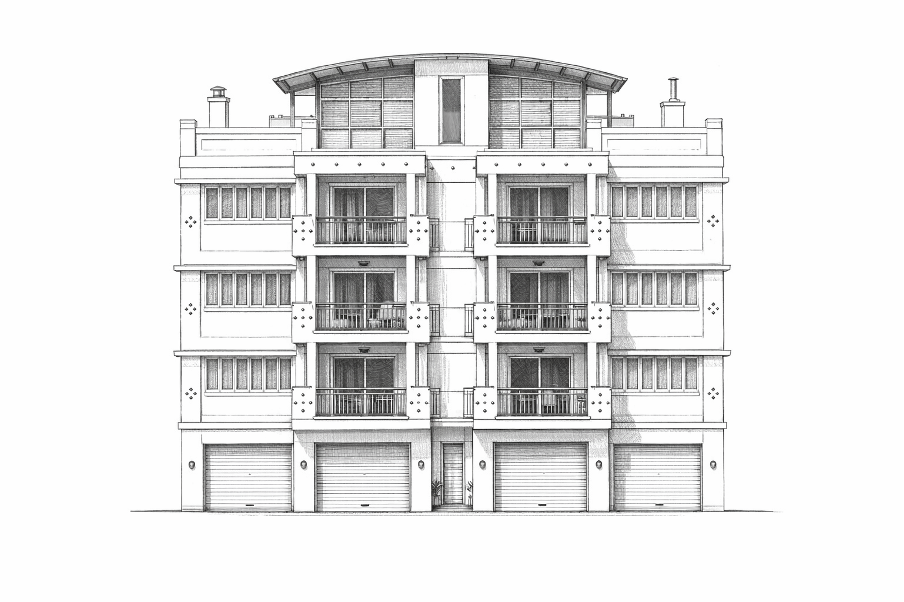
One of the building located in Julius Street, New Farm
Family history often advances by small steps. A date is confirmed, a name is corrected, or a relationship becomes clearer. Then, every so often, something unexpected turns up.
That happened to me with Ernest William Mazlin, my grandfather Victor Mazlin's brother. Ernest was born at Evelyn, near Herberton, in 1884 and died in Brisbane in 1968. Until recently, he was simply one of the wider Mazlin family whose life I had not yet properly explored.
What I did not expect to discover was that Ernest William Mazlin had become a prominent builder in Queensland.
The clue came in a State Library of Queensland blog post on the Julius Street flats at New Farm. The post identifies E.W. Mazlin as the builder of this notable group of interwar flats. It notes that the buildings were constructed between 1934 and 1938 and were heritage listed in 1997 as a rare and highly intact group of 1930s apartment buildings.
That discovery immediately gave Ernest a clearer place in Queensland history. He was not simply employed in the building trade. He was associated with a substantial Brisbane project that still stands and is now recognised for its architectural and historical significance. The Julius Street flats form part of a distinctive New Farm streetscape and belong to an important period in Brisbane’s residential development between the wars.
What makes the State Library material especially interesting is that it does more than identify the builder. The collection includes records of construction costs, materials, and suppliers connected to the Julius Street build. It also includes household accounts for the Mazlin family, including grocery purchases made in 1943. These details bring together the public and private sides of Ernest’s life: the builder responsible for a major project, and the family man whose household records have also survived.
For a family historian, this is the sort of find that alters the balance of a life. Ernest William Mazlin now appears not as a shadowy relative at the edge of the tree, but as a man whose work became part of Brisbane’s built environment. It is a reminder that family history can still surprise, and that sometimes one unexpected source can open a much larger story.
